Branches of Government


Advocating Through Pennsylvania’s Representative Democracy
Advocacy is not just about voicing your needs and concerns. It’s also about making change by reforming policy. Fortunately, Pennsylvania’s government structure, according to its constitution, provides opportunity and freedom for its constituents to voice and advocate for issues that are important to them in hopes of policy reform.
How do you get your voice heard? There are several ways to voice concerns to Pennsylvania’s government with the intent to bring change.
Option #1:
Contact The Pennsylvania Governor’s Office:
To contact the Governor regarding your question, comment, or concern, there are several ways you can do so.
It is important to understand that the Governor’s Office staff will receive and review your request. Your request will take up to 6 weeks to process given the high volume of inquiries received.
You can use the online submission form here:
Contact Form | Governor Josh Shapiro
*All requests to schedule a meeting with the Governor need to be done using the online Contact Form.
Governor’s Office
Main Phone Number: 717-787-2500
Media Inquiries: 717-783-1116
Text The Governor: 717-788-8990
Mailing Address:
501 North 3rd Street
508 Main Capitol Building
Harrisburg, PA 17120
* The Governor’s Correspondence Office manages requests for greetings, citations, and proclamations from the Governor.
Option #2:
Contact Your State Legislators
of the General Assembly:
Pennsylvania’s Legislature has 50 Senators and 203 members of the House of Representatives. Let’s say you want to advocate for the lower and upper house to vote on a Bill that supports your issue. This would be a form of Legislative Advocacy. The best way to get your Bill on the Agenda, you’ll need to make your needs known to the General Assembly.
Purpose:
— Propose, Draft, and Pass Legislation
— Review and Vote on Bills and Resolutions
— Hold policy meetings and hearings.
Legislative Committees: Often where bills are delayed or killed— You need to know a Committee Chair!
Pennsylvania General Assembly’s website has a Legislative Directory that provides contact information for all committees and their chairs for both the PA House of Representatives and Senate.
Click here to view a current committee list for the PA House of Representatives.
Who is part of Pennsylvania’s Executive Branch?
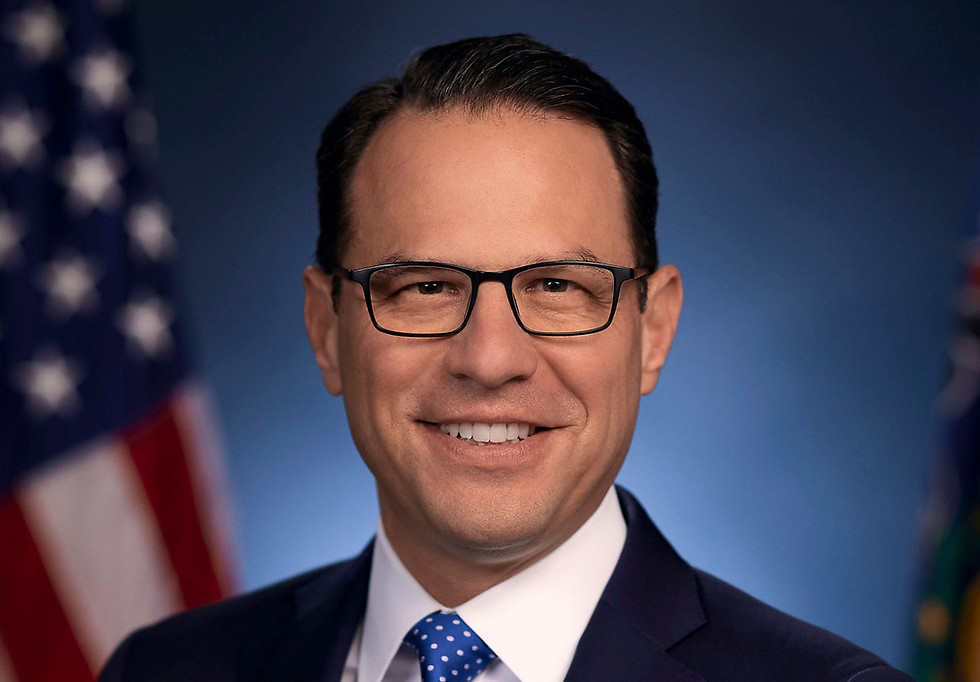
Governor Josh Shapiro

Lieutenant Governor Austin Davis
Governor
Supreme executive power lies in Pennsylvania’s elected Governor of its Executive Branch. Pennsylvania’s current Governor is Josh Shapiro. He provides oversight of Pennsylvania’s state laws and the National Guard. The Governor appoints all Cabinet secretaries and Board and Commission seats after confirmation by Pennsylvania’s legislative Upper House (Senate).
Governor: Can sign or veto bills.
Lieutenant Governor
The Commonwealth of Pennsylvania’s Lieutenant Governor is elected with the Governor and serves in a ceremonial role as the President of the Pennsylvania Senate. The Lieutenant Governor will cast a tie-breaking vote in the Senate as needed and is the Chairman of the Board of Pardons and the Pennsylvania Emergency Management Council. The Lieutenant Governor would also act as Governor if the incumbent cannot fulfill the duties and responsibilities for any reason.
Executive Agencies
Executive Agencies interpret and carry out the laws. Under the Governor’s Authority, Executive Agencies oversee the public services of Pennsylvanians. This also means that the programs within these Departments formulate and implement policies and regulations. If you would like to advocate for an issue and policy change for a particular public service, the best way to do so is to contact the Executive Agency associated with your service needs. Policy considerations, public comments, and policy reform are more likely to occur when outreach is made directly to the Department instead of your state legislature office as these agencies will be the subject matter experts of your issue or concern.
Independent Agencies & Boards
Unlike executive agencies whose heads report directly to the Governor, independent agencies & boards have separate authority defined by the Commonwealth Attorneys Act and other state laws. They generally handle specialized regulatory, licensing, or administrative duties. A list of some of the most notable agencies is included below.
Pennsylvania’s Executive Agencies:
2. Department of Banking & Securities
3. Department of Community & Economic Development
4. Department of Conservation & Natural Resources
7. Department of Environmental Protection
8. Department of General Services
10. Department of Human Services
12. Department of Labor & Industry
15. Department of Transportation
16. Department of Military & Veterans Affairs
18. Department of Drug & Alcohol Programs
20. Pennsylvania Public Utility Commission
Independent Agencies & Boards:
Below are two search engines that direct you to the appropriate Executive or Independent Agency that can assist with your questions, concerns, or issues around particular services. You can search by the service or the agency. When you search by service, it will suggest the Executive Agency affiliated with that service.
Judicial Branch
ALWAYS vote in Judicial Elections!
Pennsylvanians elect judges to all levels of the judiciary, including the Supreme Court, Superior Court, Commonwealth Court, and county courts. These judges rule in accordance with the state’s constitution, state laws, and public policy. Judges hear two types of cases: Criminal (violation of criminal law) and Civil (all legal actions not considered criminal law violations).
To Learn More about the PA Courts, please visit: Unified Judicial System of Pennsylvania
Pennsylvania Court Hierarchy
Visualize the flow of the appellate court structure, from the Magisterial District Court all the way up to the PA Supreme Court

PA Supreme Court
The highest court in the Commonwealth and the oldest appellate* court in the nation. It has administrative authority over the entire Pennsylvania court system and makes final decisions on legal interpretations.
*Appellate courts receive appeals from lower courts and determine if any legal error occurred. Appellate courts have the authority to:
• Change a lower court’s decision if legal errors are found
• Send a case to trial for further proceedings
• Affirm the lower court’s ruling if no reversible error was found

Superior Court
Hears appeals from the Courts of Common Pleas in most criminal and civil cases, family law, and Orphan’s Court (private parties).

Commonwealth Court
Hears appeals from the lower court of Common Pleas, but mainly Commonwealth’s state agencies around regulatory matters and civil actions.

Court of Common Pleas
The Courts of Common Pleas are general trial courts of Pennsylvania, situated at the County level of government, and they hear appeals from the minor County Courts.

Magisterial District Court
The first level of the judiciary. These courts determine if serious criminal cases need to go to the Court of Common Pleas, and they address regular, common legal disputes among people within the community.
For more information on PA State Courts and each level’s authority, use this link: Courts in Pennsylvania - Ballotpedia